
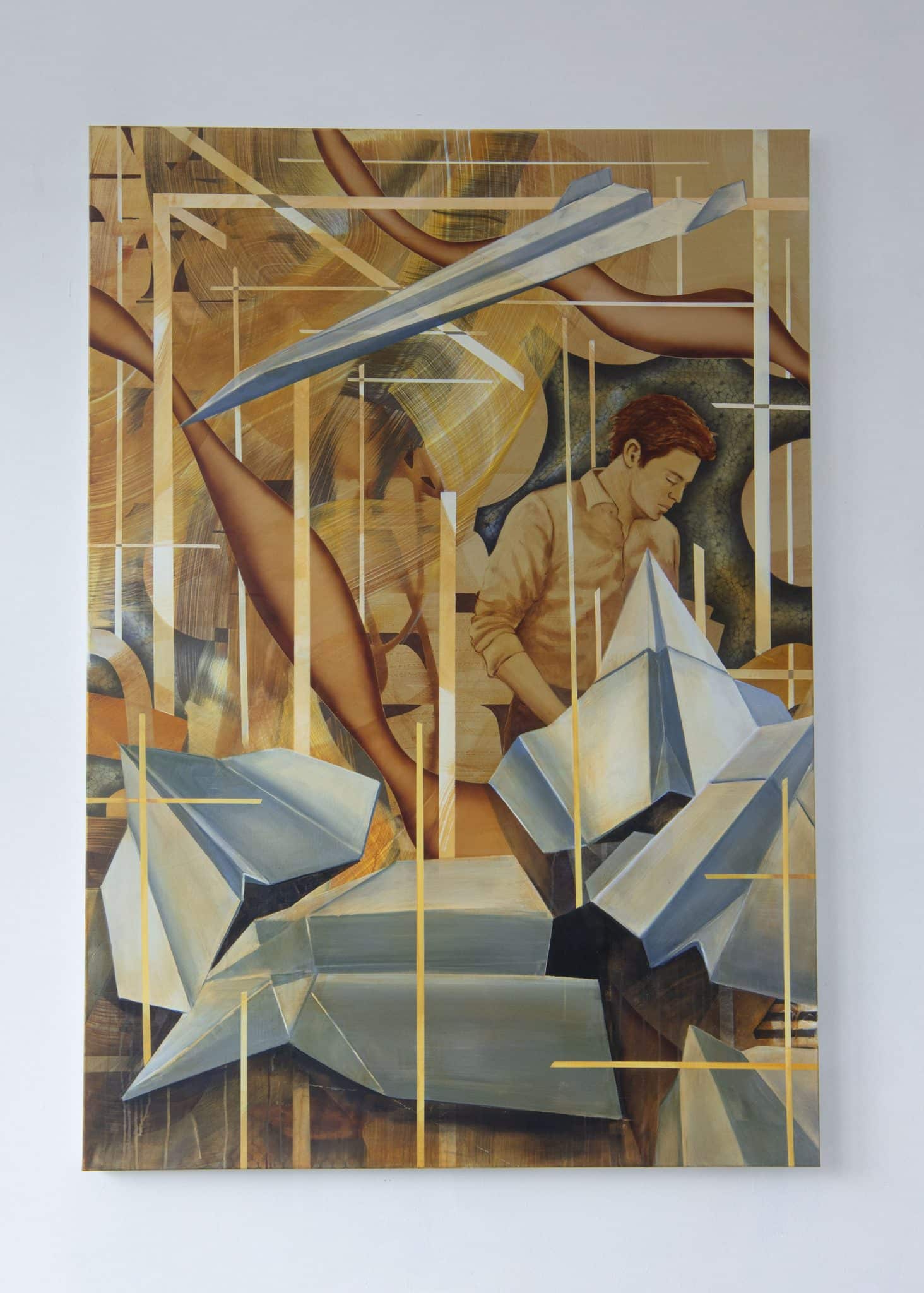
 Marc von Criegern (*born 1969 in Stuttgart, Germany) works at the intersection of drawing and painting. He studied at the Braunschweig University of Art, the San Antonio Art Institute in the United States, and the Düsseldorf Art Academy, where he was a master student of Prof. Fritz Schwegler. In addition, he pursued studies in philosophy at Heinrich Heine University Düsseldorf.
For his artistic achievements, he received the Art Prize of the German Cooperative Banks (Deutsche Volksbanken und Raiffeisenbanken) in 2000 and a scholarship from the Baden-Württemberg Art Foundation in 2002. He is a member of the Deutscher Künstlerbund, the Kunstverein Malkasten, and the Association of Düsseldorf Artists (VdDK 1884). His recent exhibitions include DIE GROSSE NRW 2025 at Kunstpalast Düsseldorf, „Und wir fangen gerade erst an“ (en. And We Are Only Just Beginning) at Kunsthalle Düsseldorf (2025), „Wir sind Demokratie“ (en. We Are Democracy) at the Deutscher Künstlerbund in Berlin (2024), and the solo exhibition „Goldener Käfig“ (en. Golden Cage) at the Jacobihaus of Kunstverein Malkasten Düsseldorf (2023). His works have also been presented at the Lehmbruck Museum in Duisburg and the Sprengel Museum in Hanover.
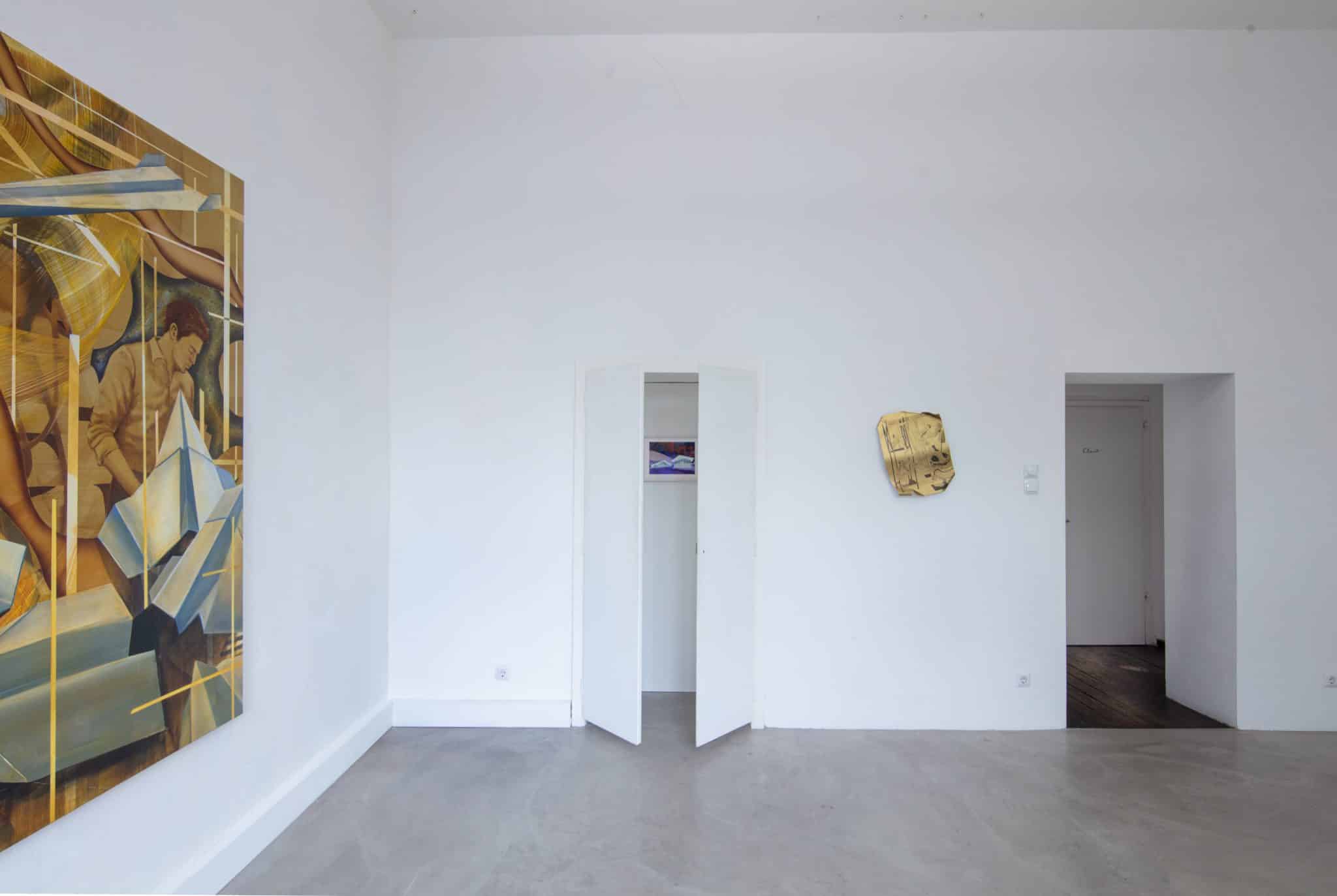
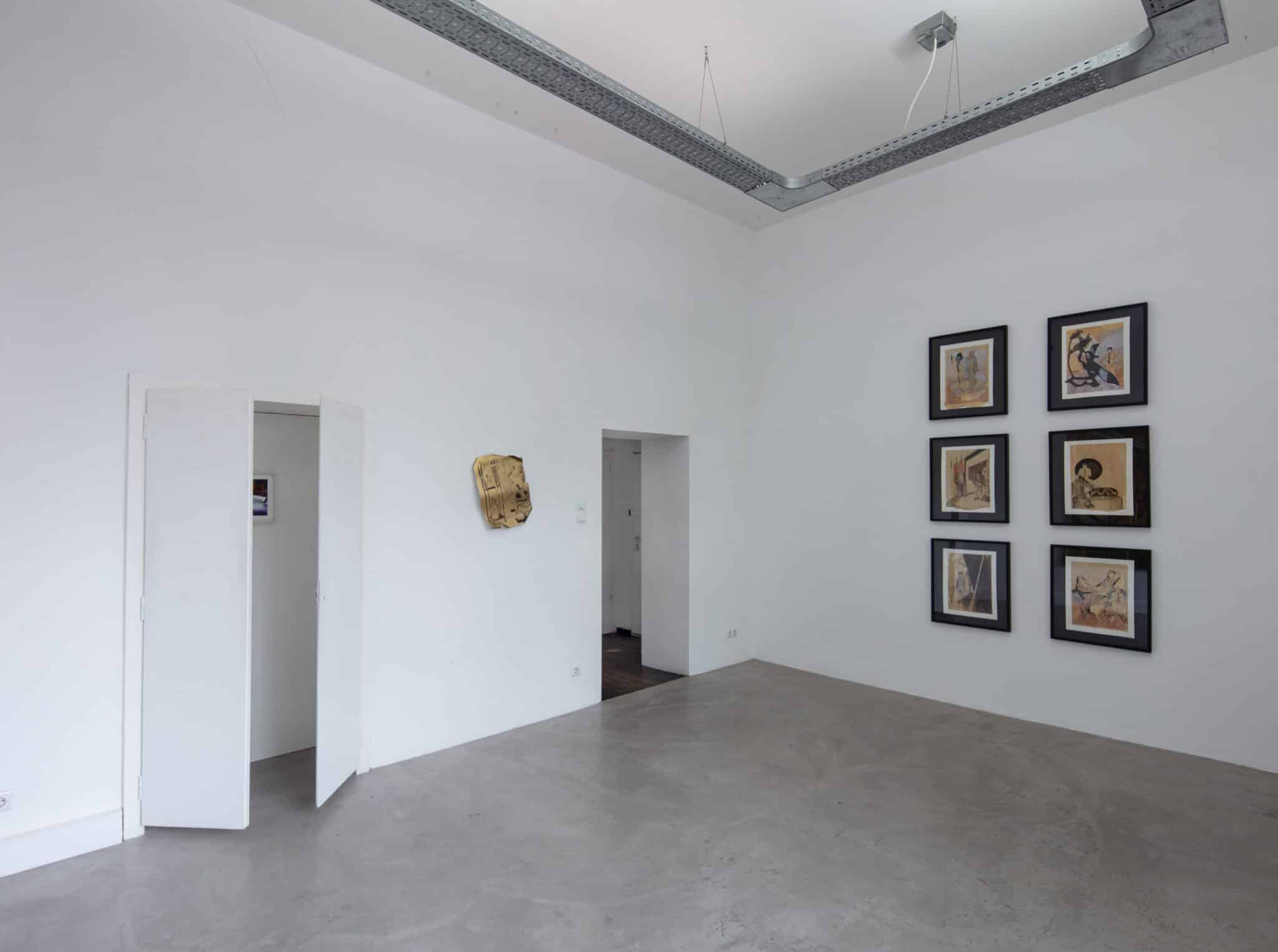
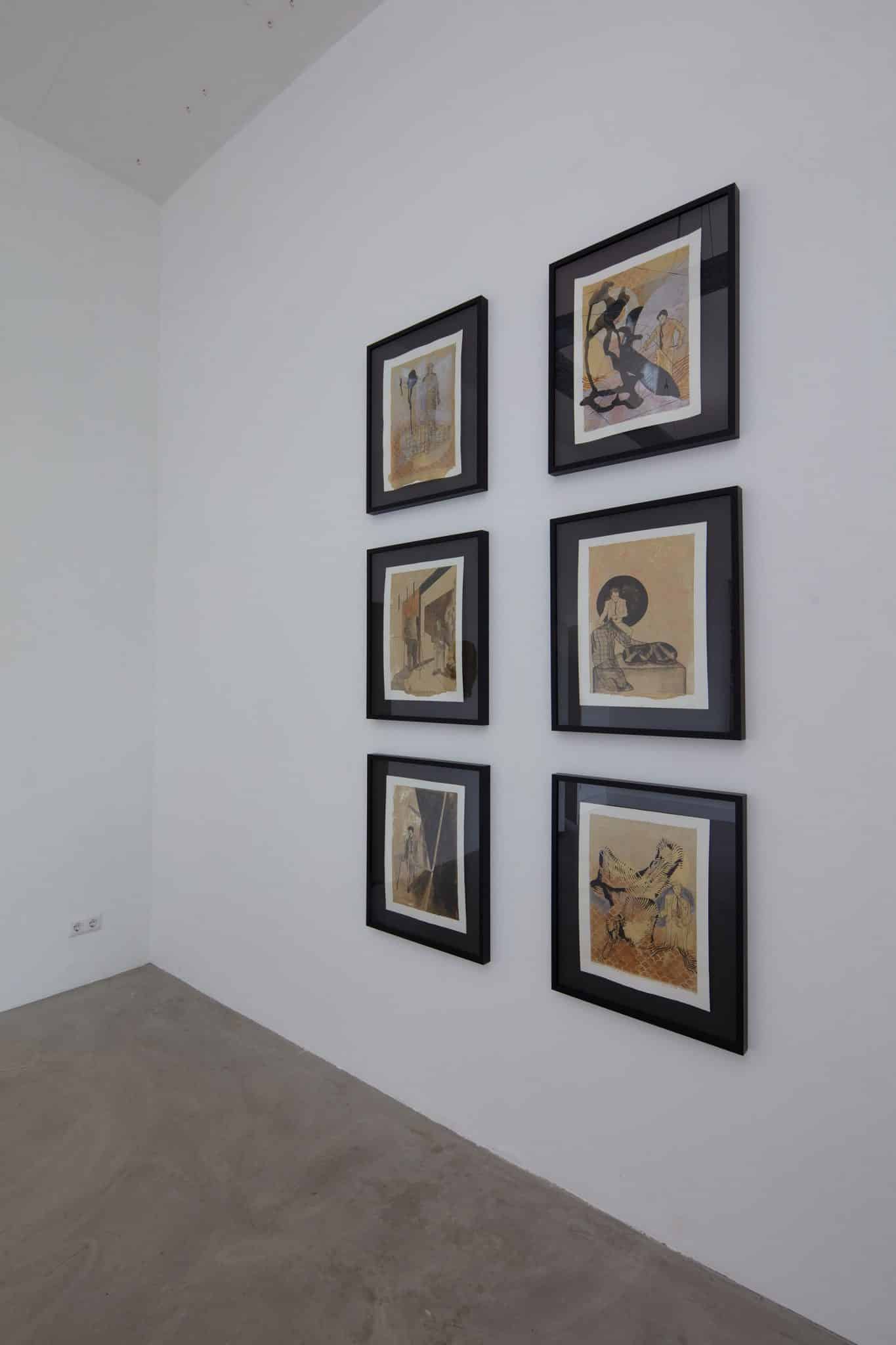
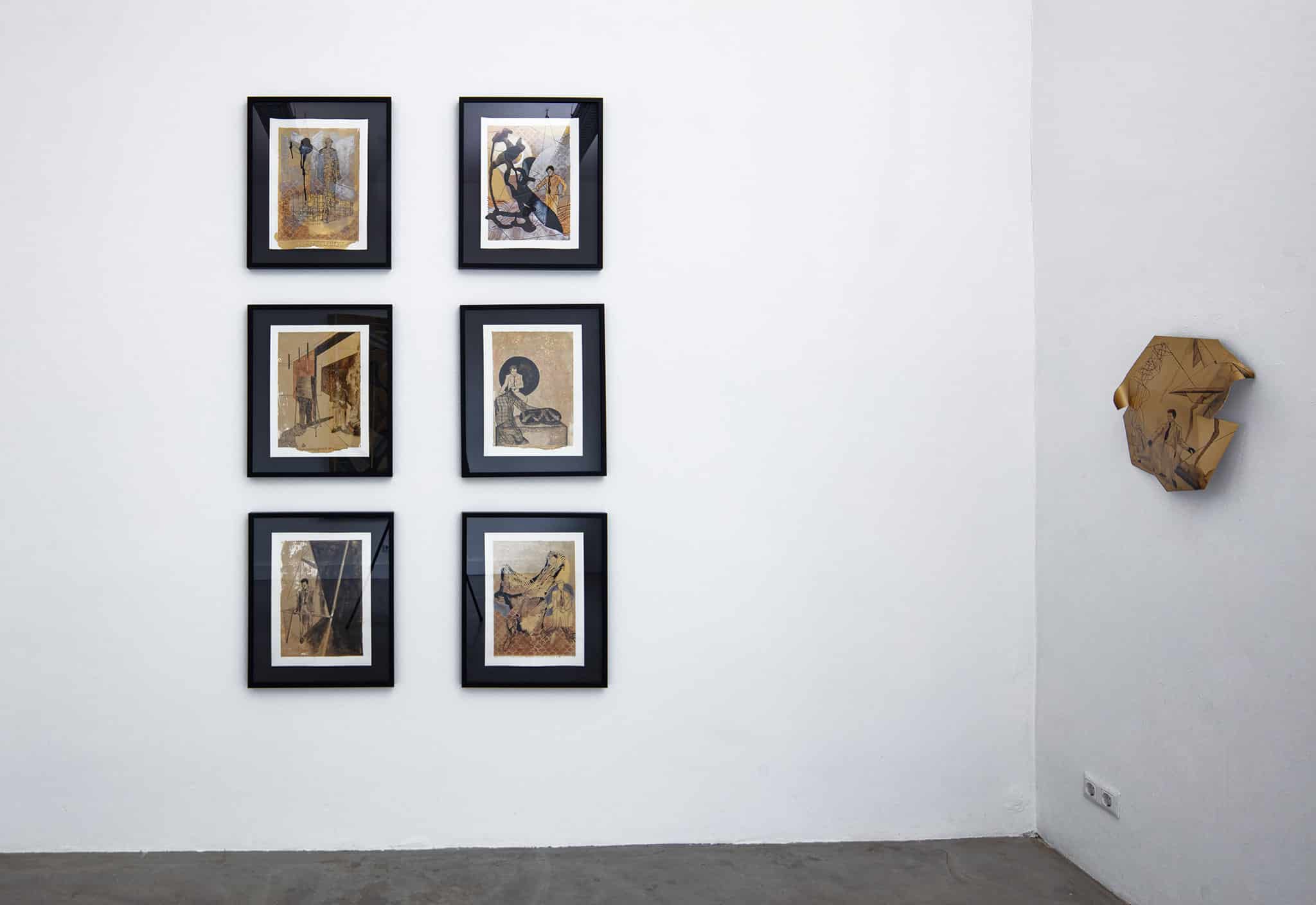
Proceed with caution – for any careless movement might cause this game of line-Mikado to collapse. It is precisely this balancing act between classical Constructivism and Surrealist iconography that defines Marc von Criegern’s paintings, together with their cast of eccentric protagonists. They are employees of the Bartleby kind: with solemn expressions, they go about their mysterious tasks. They stand amidst frameworks of rods and flying contraptions, pull at wires, and inspect strange machines.
The memorable futility of their actions, their absurd persistence in seemingly meaningful gestures, and their activity within pictorial spaces that have slipped free of the rules of perspective—where shadows fall only when they choose to—are condensed by von Criegern into visual metaphors of remarkable enigmatic power.
Many of his works revolve around the theme of invention. Marc von Criegern has engaged deeply with Diderot’s Encyclopédie and its illustrations. Yet, upon closer inspection, these apparently clear and schematic representations prove deceptive. No solutions are to be found here. Rather, one encounters uncertainty. The scientists, engineers, and conjurers stand with complete confidence amidst the intricate networks of their apparatuses. Like spiders, they pull at the threads while remaining trapped within their own webs. Triumph and ruin coexist—rendered in a compelling pittura metafisica for the twenty-first century.
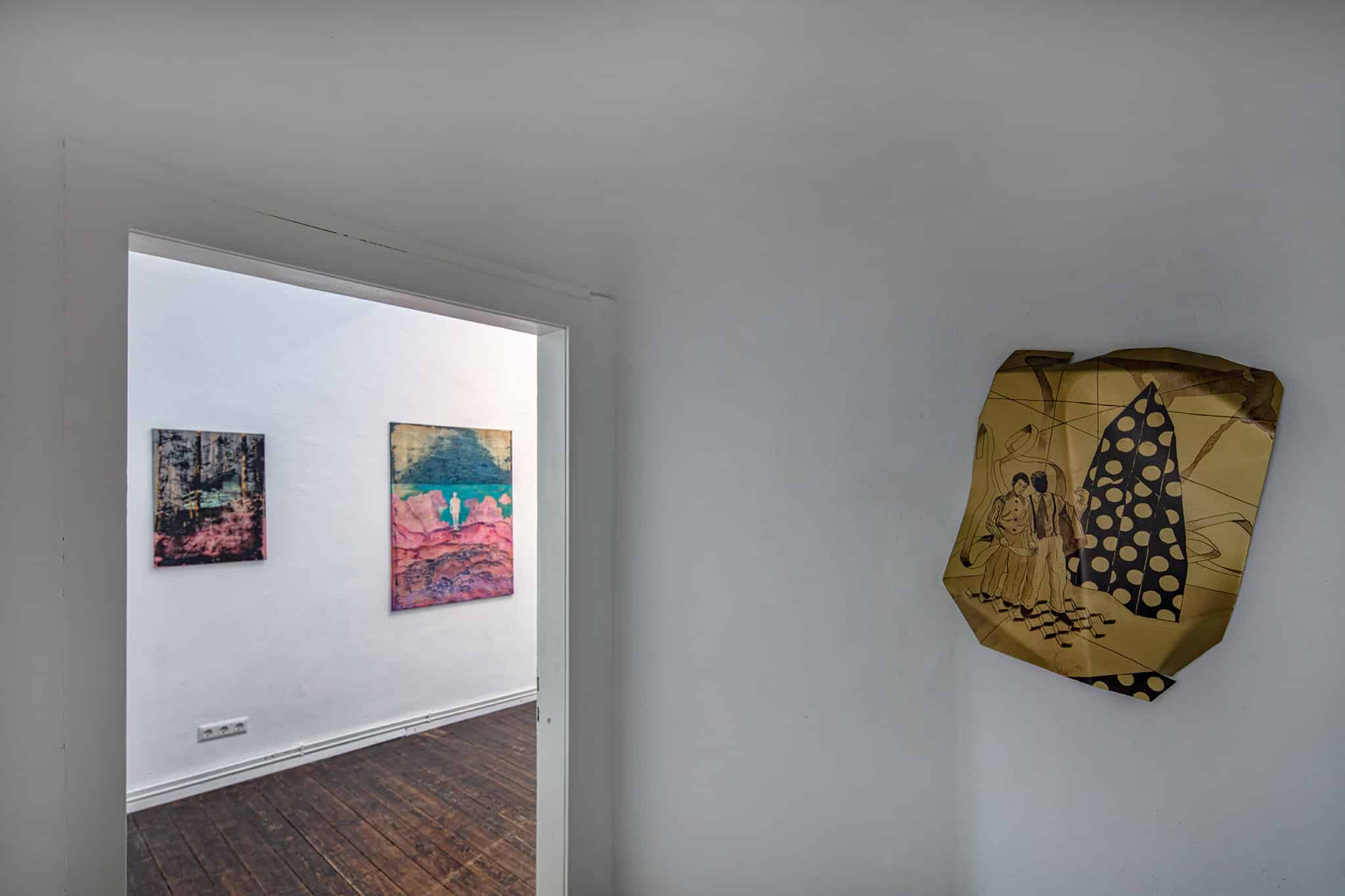
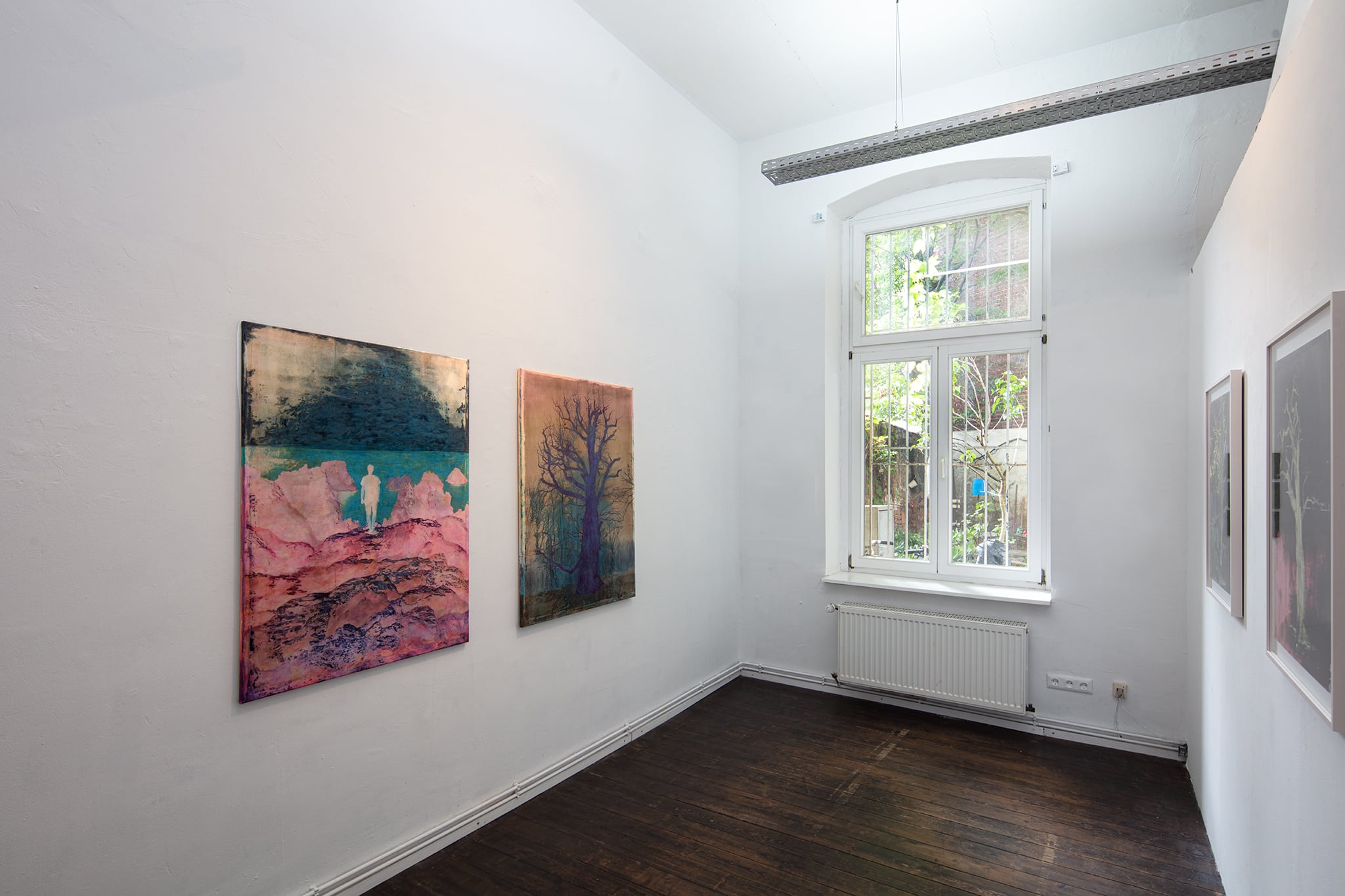
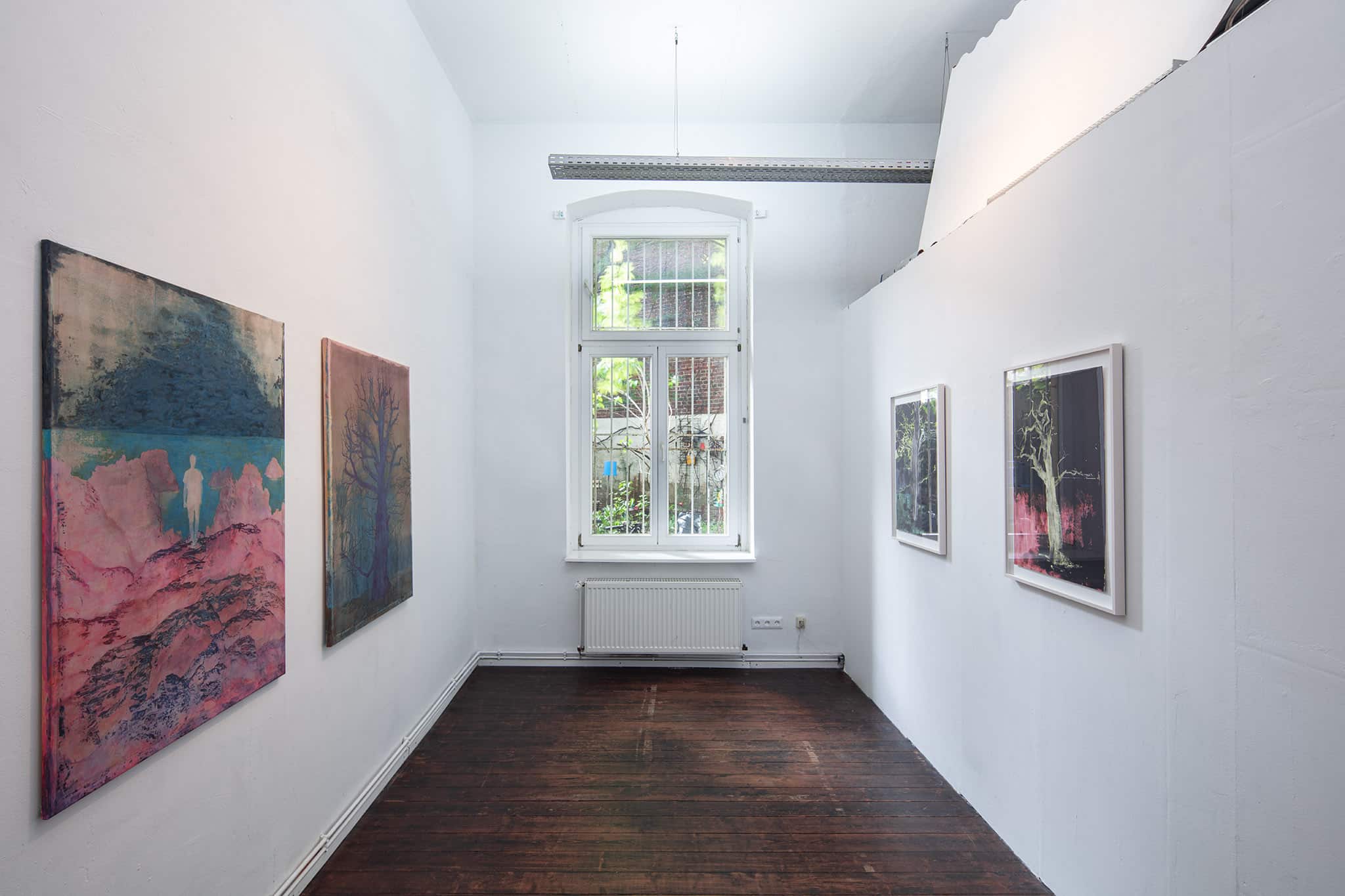
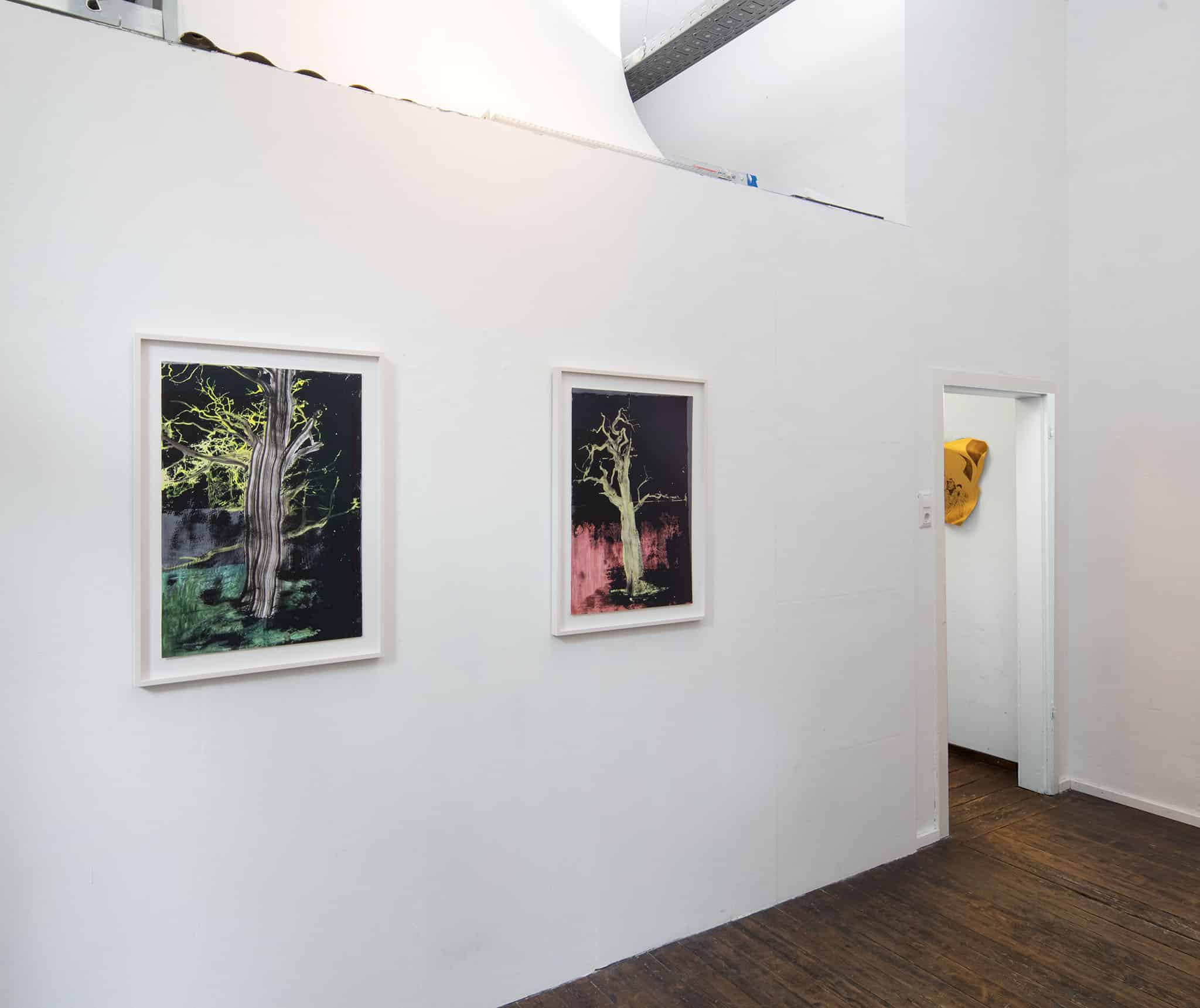
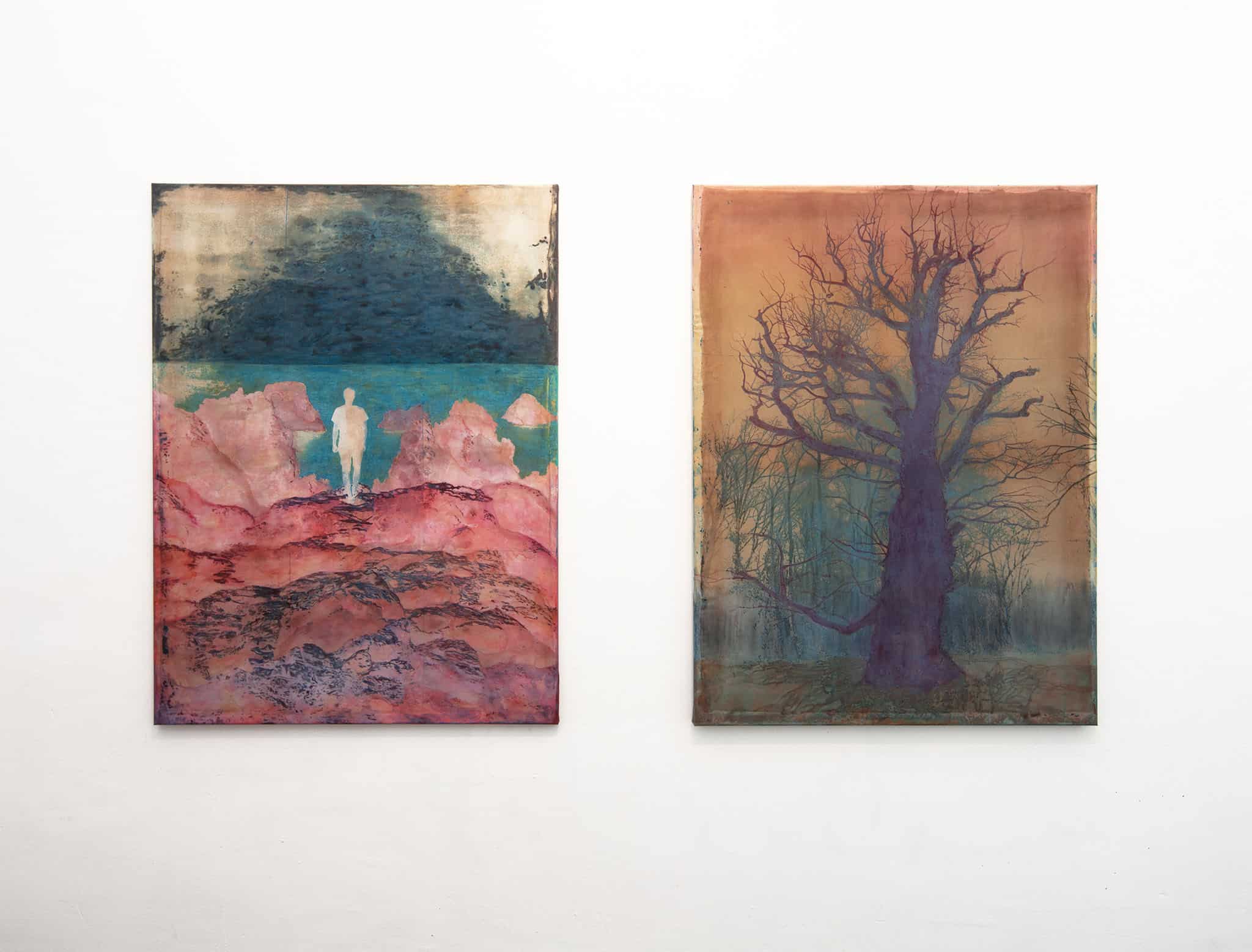
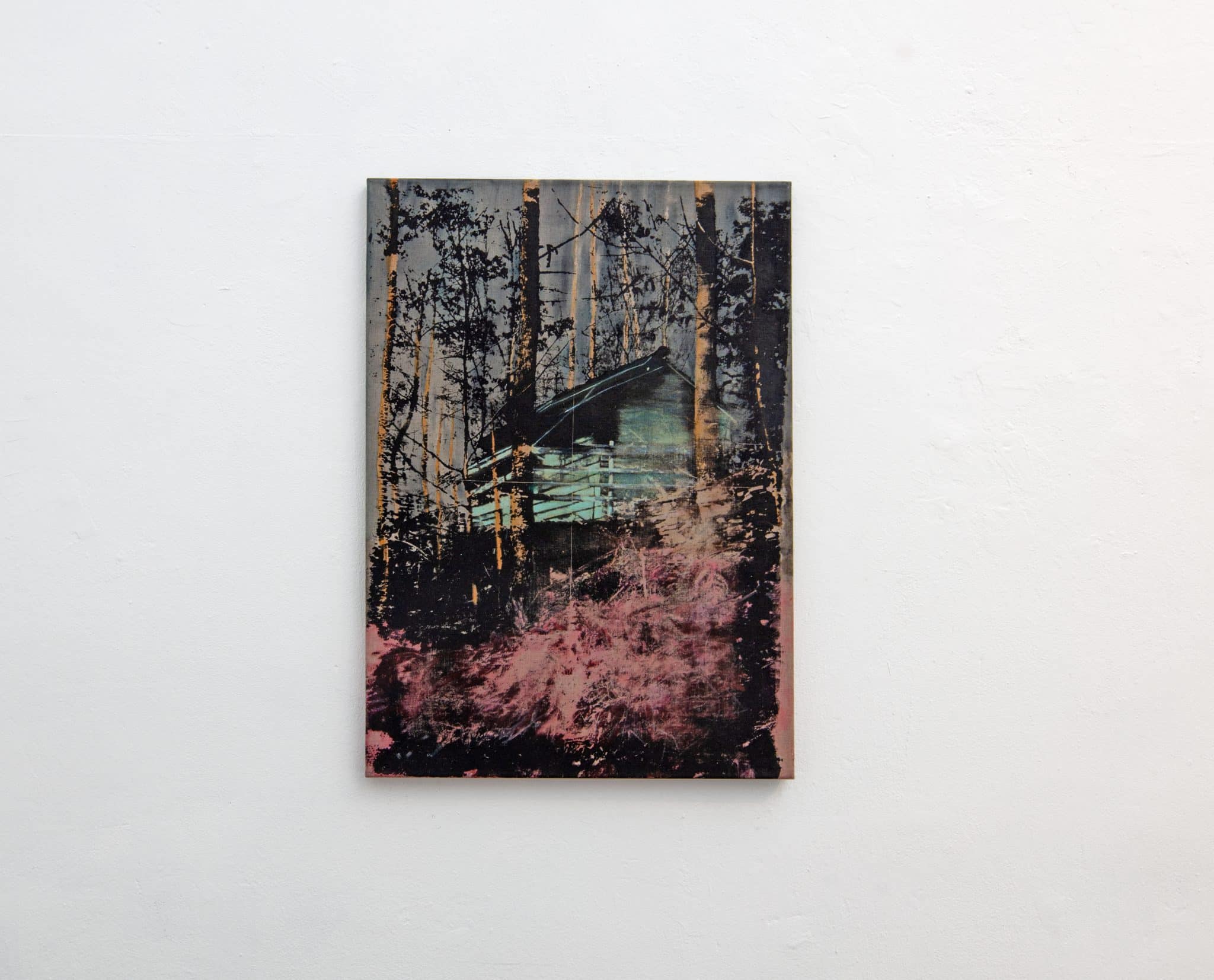 Cosima Hawemann She studied at the Kunstakademie Düsseldorf from 1997 to 2004 under Prof. Jörg Immendorff, Prof. Helmut Federle, and Prof. A. R. Penck, whose master student she became. In her work, she combines drawing, painting, and photographic elements to create atmospherically charged pictorial spaces that oscillate between memory, perception, and fragment. Her works are characterized by a sensitive visual language in which figurative suggestions, reflections, and narrative ruptures converge.
In recent years, Hawemann has participated in numerous solo and group exhibitions nationally and internationally. Her most recent solo exhibitions include 'Pentimentalreise' at the Kunstsammlung Neubrandenburg (2024), 'Spiegelungen // Reflections' at the Showroom für Fotografie Simone Klein in Cologne (2024), 'INVERSE EMPIRE' at Galerie Coelner Zimmer in Düsseldorf (2022), 'Erstschneenacht' at Kunstverein KIT in Lippstadt (2021), and 'Grazile Chimären' at Galerie Kaune Contemporary in Cologne (2019). Her group exhibitions have included presentations at Galerie Martin Kudlek in Cologne (2025), the Städtische Galerie Breslau in Poland (2025), Julia Ritterskamp in Düsseldorf (2025), KUMA Art Museum, Seoul, and Public Inje Naeseorak Art Museum in South Korea (2024). In addition, she was represented in exhibitions at Kunsthalle Düsseldorf in 2019 and Foley Gallery in New York in 2018.
In 2023, Cosima Hawemann was awarded the Heinke-Ursel-Lüttschwager Artist’s Book Fellowship. She was also an Artist in Residence at Künstlerdorf Schöppingen in 2009 and at Atoll Bedburg-Hau in 2000. From 2009 to 2012, Hawemann served as a member of the Board of Trustees of the Stiftung Kunstfonds in Bonn.
Her work has been exhibited at, among others, the Kunstsammlung Neubrandenburg, Museum Kunstpalast, Museum Morsbroich, and Kunsthalle Düsseldorf, as well as internationally in Seoul, New York City, and Luxembourg. Her works are held in public and private collections in Germany and abroad.
“Latente Unruhe und Unbestimmbarkeit: die Arbeiten von Cosima Hawemann lassen Szenarien entstehen, die sich einer visuellen Verlässlichkeit entziehen. Sie zeigen Momente und Situationen, die auf etwas verweisen, das sich nicht gänzlich greifen lässt: Spuren einer Präsenz, die ins Abwesende übergeht.
The theme of doubling is taken up (…) by Hawemann in her works. Her images are populated by doppelgängers, by figures that appear as shadows or silhouettes.
The media-related connection to film and photography becomes apparent (…) on the technical and material level of the works. The images (…) are predominantly based on found footage (…) and are subsequently worked on by the artist using a variety of techniques and materials. In particular, the technique of overpainting causes the images to occasionally shift towards abstraction. The cinematic and photographic qualities are also reflected in the process through which the works are created, which draws on a technique related to screen printing and produces a moiré effect: optical interferences arising from the interplay between photography and painting.
Die Überlagerung wird damit zu einer präsenten Geste in Hawemanns Werken. Doch sind es nicht nur die Material- und Farbschichten, die miteinander interferieren, sondern auch die Ansichten: das Innen und Außen. Der Blick von außen auf die Figuren und Landschaften wird zu einem Wahrnehmungsbild, einer Innenansicht. So erzeugen die Bilder unentwegt Déjà-vus: die das Einsame und teils Unheimliche umspielenden Portraits und Landschaftsbilder erinnern stets an etwas, das unbestimmt bleibt. Damit schreiben sie Szenarien fort, die zur gleichen Zeitbeides vollziehen: Wahrnehmbar-Machen und Entziehen, Manifestieren und Auflösen.”
Excerpt from a text by Svetlana Chernyshova